Tuesday, June 30, 2009

Welcome to the Caribbean

I only arrived a few days ago, but it seems a lot has already happened since I've been here. On Friday (my second day), I went to a dinner to meet all the other people in my program. Somewhere around 10:00 it came up that a group was leaving the following day for Islas de Rosario, or the Rosario Islands. They were leaving around 7:15 - did I want to come? Absolutely. So I got up the next morning at 6:30, packed my bag, and headed off with them to the docks to chart a boat. At that hour it was already hot enough to make my waterbottle sweat, and I was anxious to get on the boat and feel the breeze. Of course it took a few hours to bargain for a price and wait for the boat, but the cool and refreshing hour-long ride to the island made up for the wait in the sun. The boat stopped at one smaller island in the middle of our ride, but our destination was La Isla Grande, the Big Island in Islas de Rosario.

What greeted us as we arrived wasn't exactly what I'd expected...it was better. The woman back in port had mentioned a kind of touristy, resorty place. The five guys in chairs and hammocks didn't exactly exude tourist central, which I was glad for. Juan, our adorable, house-elf sized host greeted us with a huge smile, and we agreed to pay 40,000 Colombian pesos for one night's accomodation in cabins and three meals. $20 - not too shabby.

That night we ate dinner early because the sun sets around 6:30, and Juan and our other host Gorgi needed light to cook our meal. Our site didn't have electricity. Our dinner had been swimming only an hour or so before, and it was absolutely delicious. After dinner I wandered out alone to the end of the long dock and sat down to watch the sunset.


Soon moon-spangled waves sparkled around me. The only noise was the waves beating underneath me and the scuttle of crabs who shared my dock. Once 3-D clouds now bled into the sky like deep eraser marks of someone trying to smudge the stars, and lights of neighboring villages lit the shore. Apparently I was out there longer than I thought, because I started to hear voices from my group shout across the water, so I wandered back to convince them I hadn't been eaten by a shark.

There were seven in our group. We came either from AIESEC, my program here, or knew someone in AIESEC. Most of us had only met that morning, but we all got along really well, and just spent the evening talking. I think we were all pretty friendly, laid-back people, but then again clear turquoise water, beaches, and beer aren't exactly conducive to awkward social situations.

The next morning at breakfast, we were graced with a visit by Javier, the village drunk. He sat down and proceeded to tell us that he was jealous of no races, that he loved everyone, and then asked if we believed in God. Apparently some of our answers in the affirmative didn't convince him, because he asked us again several times to make sure. After breakfast we followed Gorgi around exploring the island. Highlights: the battered door with "50 Cent" graffiti-ed into the green paint; chickens; and the stone offering to La Virgen de Rosario, the Islands' patron virgin protector. Lowlights: mosquitos. Gorgi showed us the local way to keep the little bloodsuckers away. It involved taking a light branch of leaves and gently flogging yourself while you walked through the forest. We flogged. The mosquitos kept biting. My branch broke. I gave up. We did find the more resorty-type place with a full bar and cute little huts, but I was glad the boatman had dropped us off at our location.

After an afternoon of more swimming and beach-lounging, we headed back. A weekend on the island was the perfect introduction to Cartagena. I didn't spy Jack Sparrow anywhere or come across a secret stash of rum under the coconut trees, but the trip was amazing nonetheless. Sun, clear water, wonderful people, and fresh seafood? A girl could get used to this.

Friday, August 8, 2008

The end of the end

Today our trip is over. After catching a short flight back from Salta, I find myself back in the city I’ve learned to love over the past two months. The end of our cracked-out, mad-hatter dash across Bolivia and Peru means that the end of my 6.5 months as an ex-pat is fast approaching. In three days I’ll be in Boston, surrounded by immediate and extended family members. Nat and I covered a lot of ground over the past two weeks, in more ways than one. The best way I can think of to sum up our trip (without getting too corny or bogged down in desultory details) is to write a list. So, here it is. The grand tally, as it were:

Number of:

Flights taken: 3
Bus rides: 11
Long cab rides (excluding to and from airports and bus stations): 3
Train rides: 3
Border crossings: 4
Times we ate alpaca: 2
Times we were hit on by ‘a real life Inca!’: 1
Llamas seen: not enough
Warmer pieces of clothing purchased: 7 (mittens count as 1)
Volcanoes climbed: 1
Bad sunburns: 2
Mummies seen: 4
Love-tokens purchased: 1 (by Natalie, but in her defense she just wanted a picture with the love-token seller…)
New friends/ people we can stay with when we keep traveling: many
Times we got kicked out of a cab: 1
Andean music videos we were subjected to: too many (and yet, never enough)
Times we got fed-up with other traveling Americans: a lot
Times Nat and I got fed-up with each other: never (at least to my knowledge)
Sunrises witnessed: 4-5
Pictures taken: over 400 (collectively)
Times we got food poisoning: none
Times I spoke Arabic: 1
Pisco sours drunk: 4
Traditional tribal dances watched: 2
Times we tried not to think about the trip ending: many

And there you have it. That was our trip, in a nutshell. The two things I can say for certain are that it was wonderful, and that I will be back (hopefully soon), to this wonderful continent. To the llamas, the Incas, the quinoa, and the mountains: hasta luego.

The summit of the trip: Machu Picchu

Geographically it made sense for us to save the best for last. Our anticipation had been building since we’d started planning the trip, and after a relaxing day exploring museums and shops in Cuzco, we were off to Machu Picchu. We took a long cab ride and a train to a town called Aguas Calientes, which is at the base of Machu Picchu. We only had one day at Machu Picchu and were poised to wake up at an ungodly hour the next morning, so we went to bed early.

At 4:00 AM, it was time to get up. The bus to the mountain didn’t leave until 5:30 or 6:00, but we were told that people lined up really early to catch the buses since they only let in 200 people for the first shift every day. We arrived at the bus stop at exactly 4:21 to find that apart from six other hearty souls… no one else was there. Feeling pretty pleased with ourselves and generally hard-core and badass, we sat down to wait, ingesting some battery acid (otherwise known as coffee), and bananas with peanut butter. We almost felt as though we should have lit some incense and mashed some acai berries with woodchips or something, but on our student budget, bananas and coffee were the go-to fuel for Inca-trekking and any spiritual ancient-god communiqués that might transpire.

After some initial confusion with bus tickets, we boarded a bus and rode up the hairpin turns of the mountain to…Machu Picchu! The whole mountain was shrouded in mist, and it was very easy to imagine an Incan religious ceremony taking place on the site hundreds of years before, or bare Incan footsteps treading between walls of stone. The main site of ruins that most people are familiar with lies at the base of another mountain called Wayna Picchu. There are ruins on top of Wayna Picchu as well, and it takes about an hour to climb up. Natalie and I scampered quickly across the main ruins to the other side, hoping to get in line for when Wayna Picchu would open at 7:00. The plan was to see the top, then explore Machu Picchu when we came down.

Going up was not easy and the altitude certainly wasn’t doing our lungs any favors, but at least we got our exercise for the day. The top of Wayna Picchu was absolutely spectacular. We took a ridiculous number of photos, but they don’t do the site justice. We sat on top of giant boulders and gazed out land dipping and sliding dramatically, like a child of the gods had pinched the earth over and over again like playdough. Soon encroaching visitors prompted us to leave the top of the mountain and make way for others, and we started the steep and slow trek down.

The sun was already hot by the time we were back at the ruins, and I was fading fast from all our lack of sleep starting to catch up with me. However Natalie had procured a map, and insisted we go find every officially-named part of the ruins. She traipsed around, proudly proclaiming, “This is the condor temple!” “This is a real sundial!” with the enthusiasm of a kindergarten teacher who has just discovered her entire class can read and understand Plato. I was amused, and went along for the ride.

After our afternoon at the ruins, we got right back on a bus and thus began the long trek back through Peru, Bolivia and upper Argentina to Buenos Aires. It took a few days, mostly because for some odd reason one cannot go straight from Peru back to Argentina. Our return trip involved many buses, trains, taxis, planes, and cars, but finally we arrived back in BA, safe and sound and quite satisfied with our whirlwind cross-country adventures.

A land of plenty


From La Paz we set out on, yes, another bus journey, this time to Copacabana. This one was short enough to travel during the day instead of overnight. Natalie passed out right away, but I was too excited to sleep. I just couldn’t take my eyes off the scenery rolling past us. It was late afternoon, and the sun turned the wide fields the color of burned honey. The fields probably would have stretched on forever if they hadn’t been corralled unwillingly by towering, blue mountains whose jagged teeth clawed at the sky, anxious to reach deeper and deeper into the powder blue cap to the world. Craning my neck upwards, I wished I could be on top of the mountains at that moment. I am addicted to the sky here; I just can’t get enough of it. It almost seems oversaturated, too blue, and I can’t help thinking that if I keep reaching out to it and turning my face towards the heavens, those extra drops of saturation might be squeezed out and fall down over me, illuminating me in a blueberry halo.

We’d been riding for a few hours when we finally stopped at a lake. “Great, we’re there!” I thought. Turns out we were just taking a ferry. The bus driver drove the bus onto a very shaky looking, barge-like contraption, and the rest of us squeezed into small skiffs. We ferried across the lake, got out (completely dry and intact) on the other side, and drove for a little ways more to Copacabana. Copacabana is a cute little tourist trap on the edge of Lake Titicaca (haha, yes, let’s all be culturally insensitive and laugh at the funny name). We had heard the lake was famous for fresh trout, and we were not disappointed that night. Nat, a brood of Irishmen and I dined on the first seafood I’d had in months. Nat and I could barely chew, we were so tired, and after our delicious meal we headed straight to bed.

The next morning after some frantic travel itinerary-revising, we caught a boat to Isla del Sol. The island was beautiful, and after our very brisk (read: frigid) 1.5 hour ferry ride to get there, we were anxious to scramble up the terraces and run around the pre-Incan ruins. The ferry back to Copacabana was late (of course), so we just had time to grab some snacks before catching our 6:00 PM bus to Cuzco, PERU!

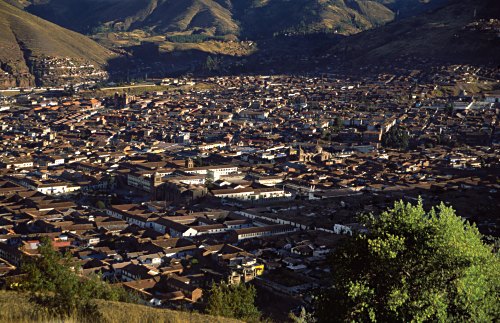
After changing buses twice and crossing one border, we found ourselves in Cuzco. The bus was supposed to get there around 7:00 AM, but it was only 4:30 when we rolled in. For some reason, we had an inordinate amount of energy, and headed off to a highly-recommended hostel, which thankfully had just enough beds available for Nat, our two Irish friends, and me. Sleep took awhile to come, but the comfy beds eventually encouraged our adrenaline to simmer down, and we set off to the land of nod.

Wednesday, July 30, 2008

High and dry


I can hardly believe that my 6 1/2 month adventure outside the US is almost coming to a close. For a final hurrah, Natalie and I decided to take a two-week whirlwind tour of Bolivia and Peru. We´re covering a lot of ground for two weeks. I didn´t realize until we got on the road that even though Bolivia is the fifth largest country in South America, it´s still the size of Spain and France put together. I thought the nine hour busrides through the Sinai were long, but this trip so far has been dominated by 15-hour tours.

Despite the amount of time we´ve spent on the road thus far, the places we´ve seen more than validate the cramped buses and dusty trains. Our first stop in Bolivia was Uyuni, land of salt flats. We signed up for a two-day tour which would include one night of sleeping in a `salt hotel´. I was a bit skeptical. Two whole days of looking at...salt? I thought it might get a bit old after awhile, but two days turned out to be perfect.

We set out around noon with a lovely Irish couple and two French girls. The air was cold and thin. Bolivia´s highest peak is over 21,000 feet, but the entire country has a high altitude, which we had spent a day or two adjusting to. It didn´t take long for us to get out of the tiny town and into the land of wide open spaces, of which Bolivia is not in short supply. The open dirt and sagebrush soon gave way to a wide, white sea that stretched on for miles and was peppered with tiny black islands. The salt was so white that it reflected light like water, and the islands appeared to be floating. The sky was so blue it hurt to look at it, and the sun beat down harshly on the salt that had cracked into millions of honeycombed puzzle pieces.

We spent the day riding over the salt, stopping to explore an island and a salt-processing factory. As dusk was approaching, our 4x4 set a course for one of the large mountains bordering the edge of the salt flat. As we got closer, we could see that the top had blown off the largest mountain, leaving bright streaming rays of rose and sun-colored stone. Yes, we were going to sleep at the foot of a volcano. Luckily we were told the volcano was very, very dormant. At the base of the volcano was a tiny village, surrounded by marsh grass, small ponds, lichen, and...what...flamingos!? At the edge of the salt desert in Bolivia, there are flamingos. I´m not sure why they are there, but they must feed on the lichen that grow on the salt and volcanic earth. We passed our pink-plumed welcoming committee and arrived at our hotel. I am using the word `hotel´quite loosely here, but the food that our tour guide made us was delicious, and the company was highly entertaining.

The next day we explored more salt formations and made it back into town to catch our overnight bus to La Paz. The bus was definitely an adventure, but our hostel and La Paz are wonderful. We´ve spent the last two days exploring museums, the witches´market (where one can buy llama fetuses to bury beneath a house and ward off evil demons), and beautiful squares and churches. I could definitely spend a few more days here, but I´m excited about the prospects that lie ahead. Machu Pichu and more adventures await.

Sunday, July 20, 2008

There are butterflies at the edge of the world


Before Magellan sailed round the world, daring seamen believed the world was flat; that they might fall off the edge into a great abyss of nothingness if they ventured too far. This weekend I thought for a moment that I could be standing at the edge of the world, but I was not navigating the high seas or staring at inaccurate maps. I went to Iguazu Falls.

Iguazu means “big water” in Guarani, which is the language of a native tribe in northern Argentina. The Guarani inhabited the region of Iguazu long before Eleanor Roosevelt went on a much-publicized trip to South America and allegedly took one look at the falls before declaring, “Poor Niagara.” After this weekend, I can see Mrs. Roosevelt had a point.

We spent three days in Iguazu, staying at the popular ‘Hostel-Inn.’ Our hostel was a few minutes outside of town, and the first thing that struck me while driving down the road were the strips of rusty earth smudging the edge of the highway and the verdant margins of forest spilling generously over the deep red. Our hostel was large, commercialized, damp, and as per usual with hostels, brimming with interesting people. There were a lot of Dutch, Belgian and English people staying there, with a handful of Israelis thrown in. We were there for the 4th of July weekend, and celebrated by toasting America’s royal creaming of the British with a bunch of rowdy Londoners while drinking Brazilian liquor. Probably the most unconventional 4th I’ve had so far, but still fun despite the fact that I wanted to track down some sparklers and whip up some strawberry shortcake.

Our first day there we decided to explore the town. I was perfectly happy to walk around looking at the gorgeous scenery and drinking in the thick air. Those who know me well know I have a weakness for water, trees, and anything earthy-crunchy. If it’s possible for one to OD on nature, it would happen in Iguazu. Our trek through town took us out to a lookout where visitors can see the border between Paraguay, Brazil, and Argentina. Top 5, one of the most beautiful places I’ve ever seen. Lush, tree-embroidered slopes fell down to an oversized river that stretched out for miles before us. I could have stayed for hours just looking at it, but everyone else in the group wanted to move on.

The second day was our waterfall day. We entered the park and got on a small train which took us to our first trail of the day. The park is shared by visitors, birds, coatamundis (which look like anteaters and raccoons mixed together), and thousands and thousands of butterflies. It seemed that every five minutes we stopped to admire a new display of yellow, orange, turquoise or purple. The trail to the waterfall takes trekkers through the jungle and then over a series of bridges. The river is huge and broken up by small islands. We walked on the metal bridges while murky water flowed several meters below us, hopscotching over islands on our way. Suddenly without warning, the trail stopped. We could see a huge wall of steam billowing above us and hear what sounded like a highway. We walked forward to a railing and looked down at the river simply falling off the edge of the earth. Clouds of bright yellow butterflies floated around us and refracted sunlight bore more than one giant rainbow above the water. There are definitely rainbows at Niagara, but the butterflies, tropical forest and sheer size of the river set the falls apart for me.

Our last day there we decided to visit an aviary and a hummingbird garden, both of which were peaceful and beautiful. We almost didn’t get a bus back to Buenos Aires, because we didn’t think we needed to book a ticket in advance. Luckily there was one bus company with seats still available, and we were able to book seats for a reasonable hour that night. We began to panic for a moment, but in retrospect I probably wouldn’t have minded had we had to spend one more day in Iguazu.

Tuesday, July 1, 2008

Purple Haze


This weekend Natalie and I went to Mendoza, otherwise known as wine country. We rode a bus for 13 hours overnight and arrived in San Rafael, the capital, around 9:00 AM. It was Saturday and San Rafael was just beginning to wake up, although it would remain in a sleepy state for most of the weekend. Nat and I spent the first day there exploring every nook and cranny, which meant wandering into chocolate shops (yes, plural), craft stores, and a cute little restaurant. Siesta still exists in this small town, so when the stores closed for about three hours in the afternoon, we wandered over to a park and sprawled out on the dry grass to look at the clouds. There is something magical about the light here. If Egypt’s sunlight is harsh, unyielding, 180 proof, then Argentina’s light is like clarified butter; soft, with all impurities removed. I could gaze at the sky for hours, which this day reminded me of an inverted river delta: not only was I upside down, but instead of a blue river on a sandy delta, concentrated milk white clouds floated over a blue shore, rippling and gathering before they quickly disintegrated. If I had been close to an earth-bound body of water, I feared both expanses might melt together, sealing me into a sandwich of great blue yonder. I wanted to hold onto the light sky, the darkening pine trees, and the golden grass, but soon it grew chilly and we had to leave for the indoors.

We had heard that the circus was in town that night, so after dinner Nat and I headed over and met up with two Australians and an American we had met at the hostel. The circus here was not at all like it would be in the US. It was more like a night club combined with a circus. There was a fog machine and a DJ mixing techno music up on the stage while flashing lights turned everything purple and green. Occasionally performers would come out and do very cool, acrobatic things, but mostly it seemed like people were there for the dance club atmosphere. We were tired and decided we’d seen enough around 12:30, so we headed back.

Sunday was our day to explore the countryside surrounding San Rafael. We hired two lively guides to take us on a mini road trip around the town. They hadn’t been to bed the night before (which made us feel incredibly lame), but they were still full of interesting information and eager to share. They took us to see rivers, canyons, a giant dam and the lake behind it, and a fruit farm. It was a beautiful and relaxing day. We cooked dinner for ourselves in the hostel that night, and then settled in to watch Batman Begins. Around 2:00 in the morning, two drunk Argentineans wandered in and tried to convince us to “share” the couch with them. They were very tired, you see, and just wanted to use our laps as pillows. Unfortunately they were not quite good looking enough for us to oblige, but we had fun talking with them for awhile and watching the rest of the movie before heading off to bed.

Monday was vineyard day, so of course I was very excited. We road the bus a couple miles out of town to a vineyard which was famous for champagne. Unfortunately, once we finally arrived we were told that the vineyard was closed for inventory. The lovely looking tea shop next door was also closed. Well crap. We were out in the middle of the country and didn’t know when or if the bus would be by again. We considered our options: Waiting, “borrowing” a tractor and driving it back ourselves, walking all the way back, or…hitchhiking. We were in the country and there were two of us, so I walked up to the road and stuck out my thumb. Soon a lovely farmer stopped, and we climbed into the back of his truck. We wizzed down the road, wind whipping our hair into birds nests while we grinned like idiots with the thrill of victory. We made our way to two vineyards after that. I had toured a vineyard once before but hadn’t really been listening. The two tour guides we had were very nice and knowledgeable, taking us up and down flights of stairs, into dark and earthy-smelling storage rooms and around goliath vats of ageing wine. The best part of course, was tasting.

After the last vineyard, Natalie and I slowly lugged our newly purchased bottles and ourselves back into town. We grabbed our bags and walked the few blocks to the bus station. The station looked like it had when we’d left it: people tangled up in comings and goings, an omnipresent smell of gasoline hanging in the air, giant half-occupied parking spaces striping the concrete. The only thing different this time was that Mendoza was saluting us farewell with a spectacular sunset. We boarded the bus against a background of technicolor layer cake. It looked as though Barbie Dreamhouse had fought an epic battle with a container of apricot sherbet, and the victor was yet to be determined. Pink and orange floated between layers of puffy frosting and pale blue. I ached a little as I boarded the bus, sad to be leaving such a place of peace and beauty, but happy to head back after the long weekend.